We Swap Rain for Heat and Weather Radars Under Attack

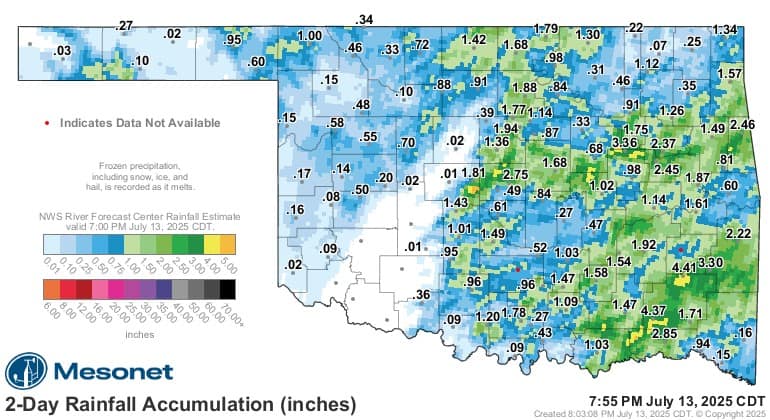
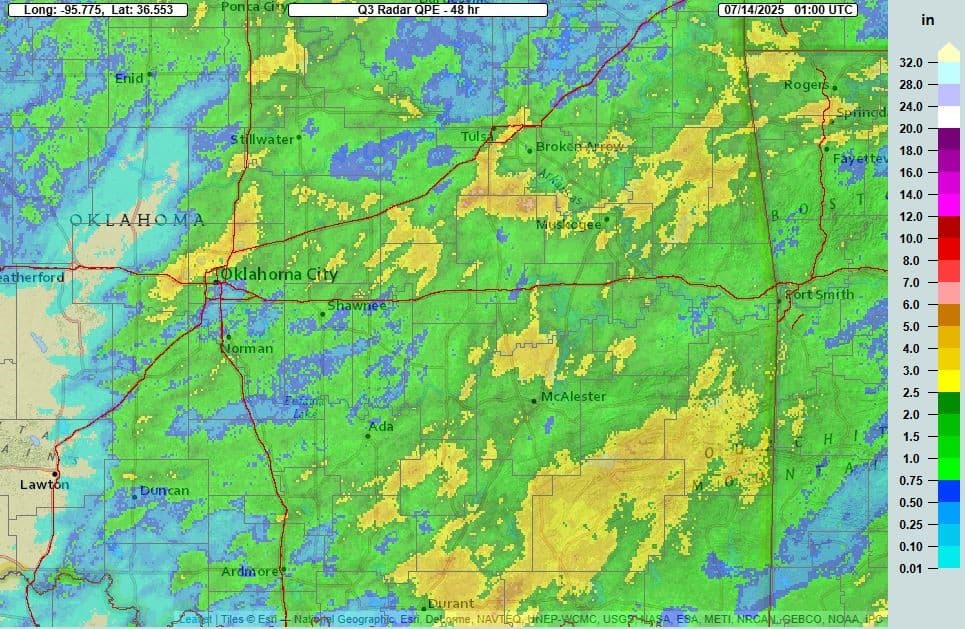
What a wild weekend for isolated flash flooding. A few areas were hit hard with over 5″ of rainfall in OKC, Tulsa, and in SE OK. This week, we’re going to slowly bring back the heat as we shut down the rainy pattern. The other thing making news these days is a conspiratorial attack on Doppler weather radars.
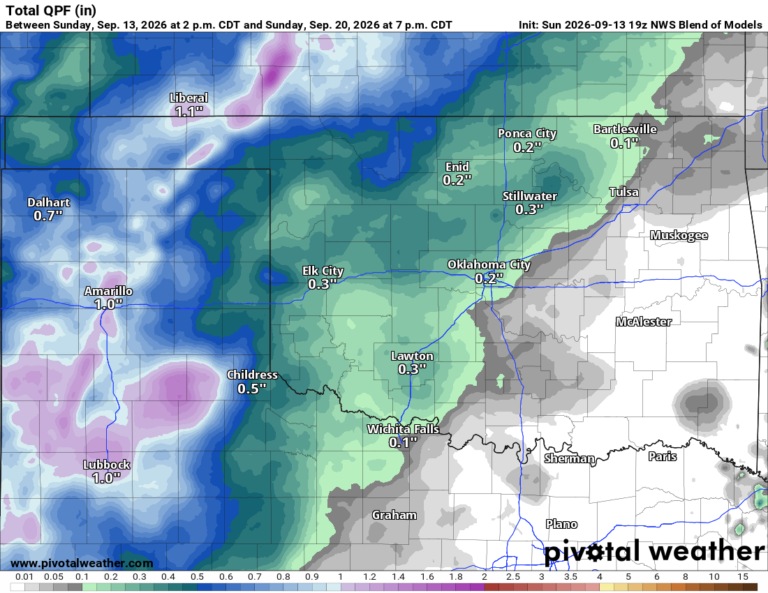
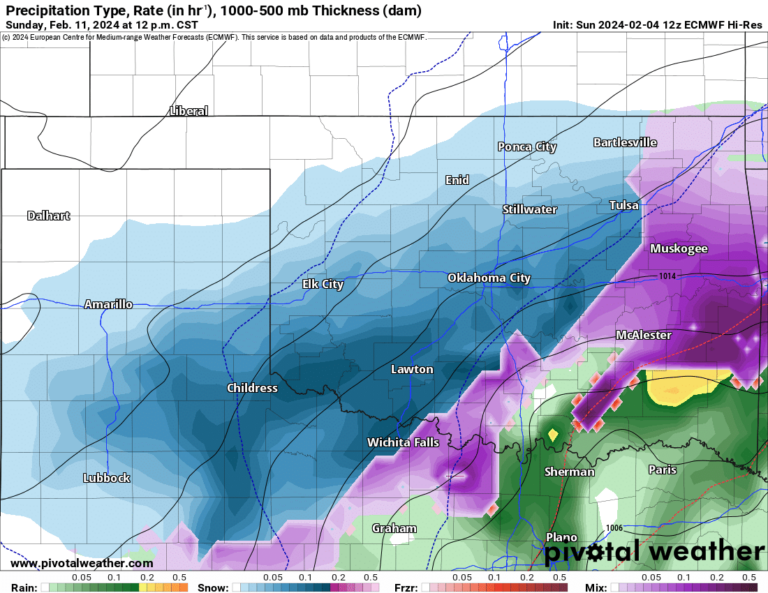
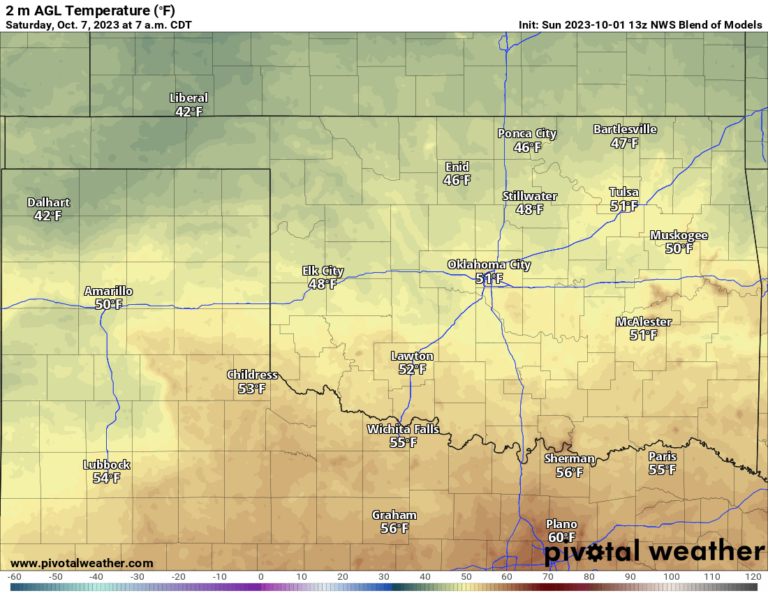
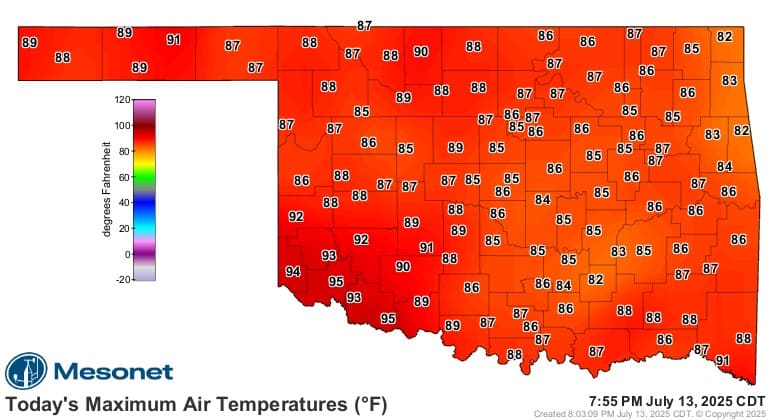
Rainfall amounts over the weekend were excessive in some areas. The maps outline the harder hit regions. One thing I don’t like about the government graphics for rainfall maps is the poor mapping overlays, which make it difficult to see towns and cities. One of the benefits of the weekend storm system was cooler temperatures. Hard to believe there are high temperatures in the mid-80s in mid-July.
Be sure to mention Aaron Tuttle when you call (405) 820-1193!
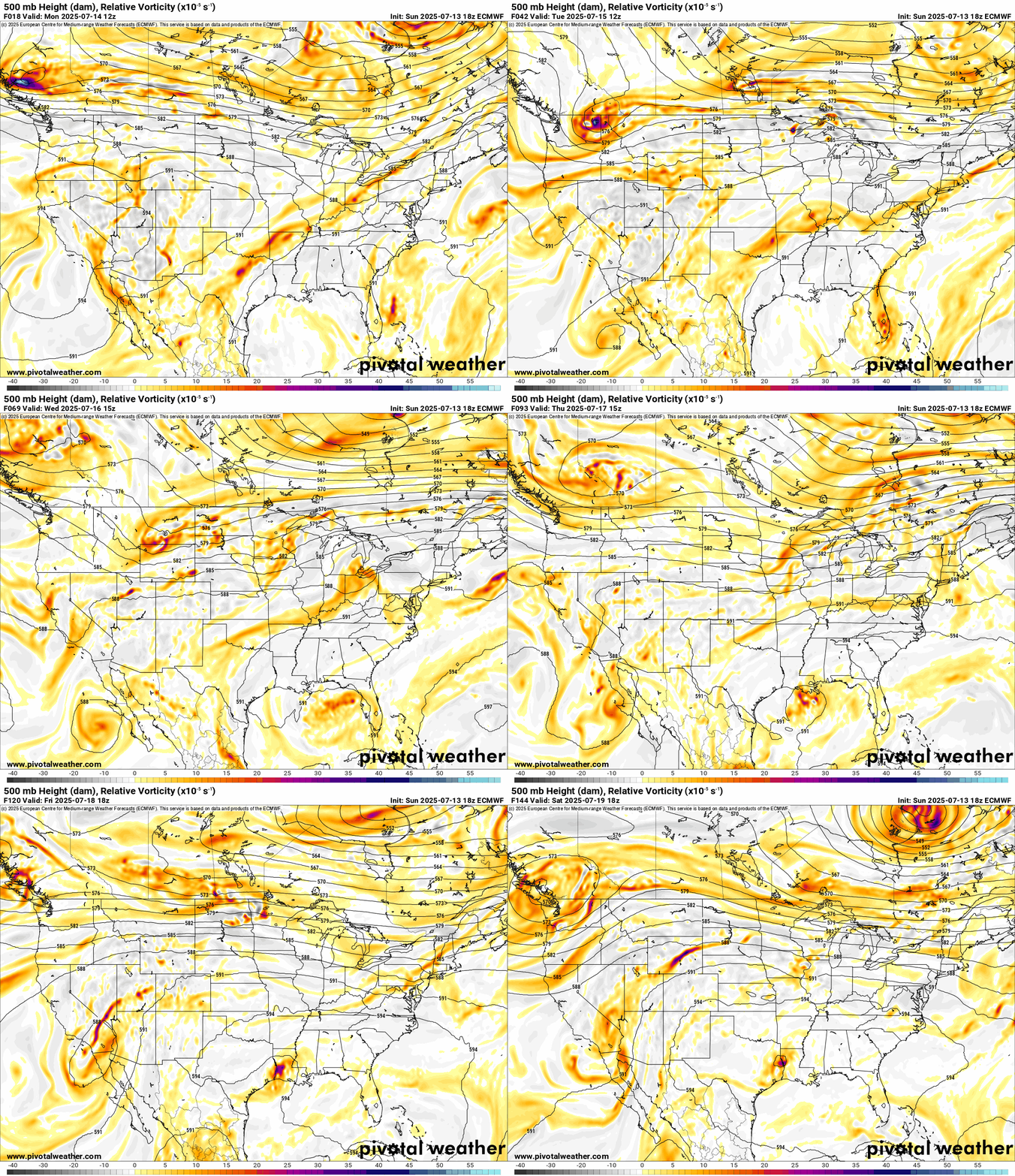
For the week ahead, the Jestream animation shows the colored areas across Oklahoma and Texas starting to wind down and move out of the region. This will help to end our rainy pattern. Long-term outlook has an upper ridge developing over the central US, which will crank up the heat and dry us out unless something can develop and sneak in from the Gulf.
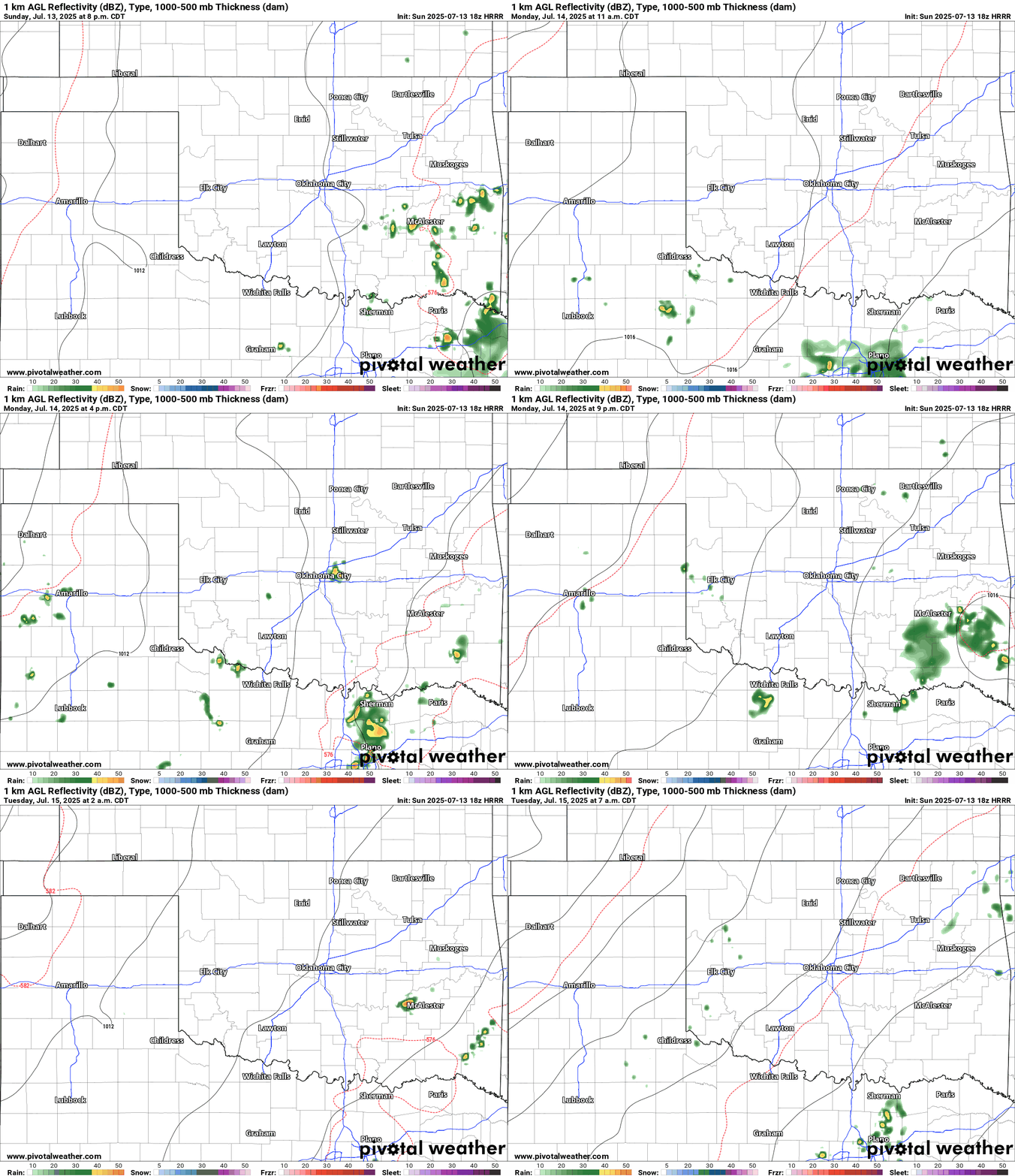
The rainfall animation below of the hi-res short-term model on Monday demonstrates how only isolated activity is expected. This will be the rule this week. A weak front may slip in Thursday, providing some scattered activity, but otherwise, we’re slowly drying things out overall. Rainfall amounts will be highest across SE OK with the departing systems, and if we can get that front on Thursday, then a boost in C OK.
Be sure to mention Aaron Tuttle when you call (405) 820-1193!
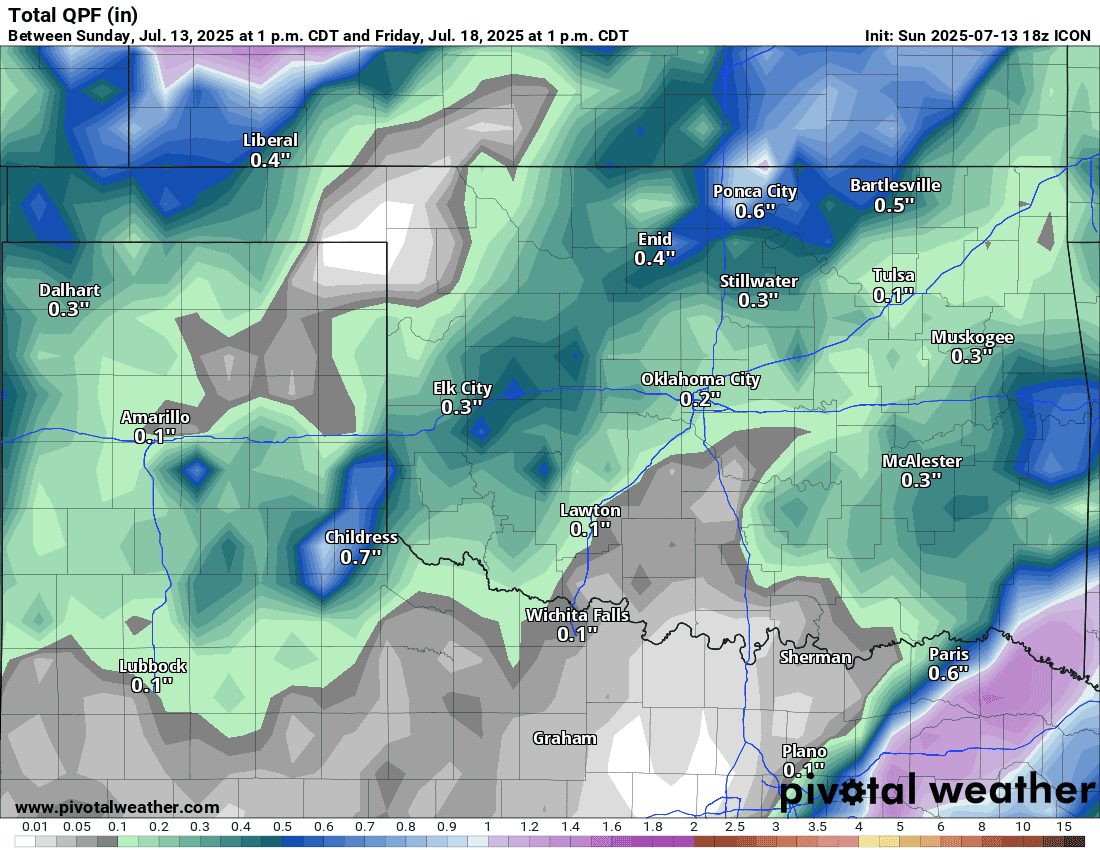
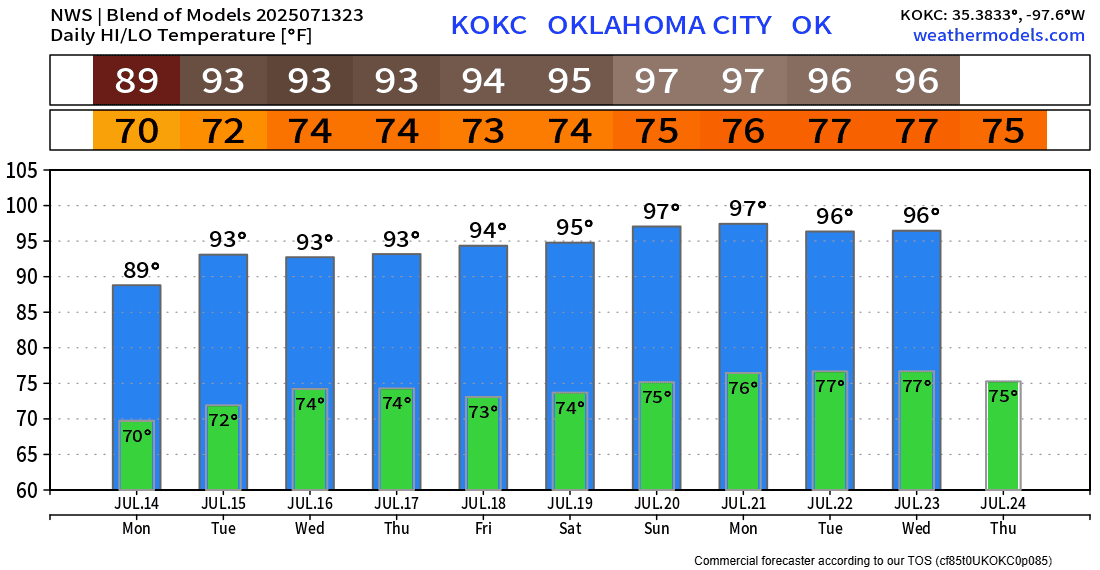
Temperatures will start to climb, and humidity levels will be a little high until we can dry things out a bit with mixing. Starting this weekend, we’ll likely see a few 100-degree temperatures sneaking into NW OK, and those will be expanding next week.
Now, regarding the latest attack on weather radar systems. There is a person claiming that NEXRADs and other weather radars are directed energy weapons used to kill humans, and they need to be destroyed. He claims to have several people ready to go (to prison) to take them off-line by whatever means they can. The irony is of course, if they were to be successful, removing the radars would actually kill people because we wouldn’t be able to track severe storms and tornadoes. Imagine the death tolls returning to the era before Doppler Radars existed. You can watch the NBC video below for more information and check out the two links that demonstrate how Doppler radars work. Bottom line, they save you, not kill you.
Be sure to mention Aaron Tuttle when you call (405) 820-1193!
NOAA: How a Radar Works
NCAR: How a Radar Works